

Where education truly begins
When discussing educational quality, the conversation often focuses on secondary school, academic testing, or access to university. However, the most decisive stage of learning occurs much earlier: between the ages of 3 and 6.
During these early years, children do not only learn numbers, letters, or colors.
They develop language, emotional security, curiosity, autonomy, and the way they will understand the world throughout their lives.
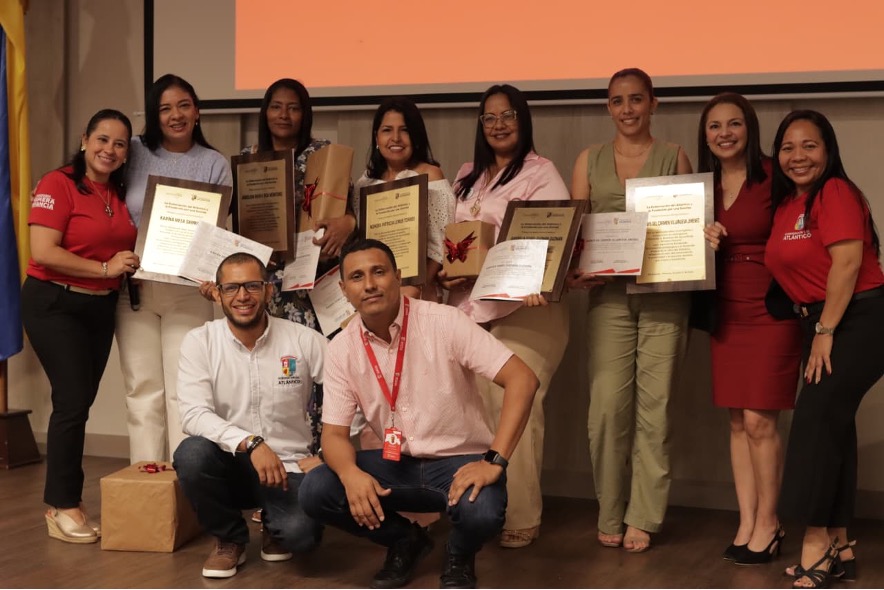
Under this vision, “Starting the Adventure of Learning” was implemented — an educational strategy aimed at strengthening the pedagogical competencies of preschool teachers and supporting the holistic development of children during their most sensitive stage.
The program focused not only on content, but on how to teach. The training enabled educators to enhance pedagogical methodologies that stimulate meaningful learning in boys and girls, promoting cognitive, linguistic, motor, and socio-emotional skills.
The premise was clear:
early schooling is not enough; it is necessary to educate properly from the beginning.
Teachers acquired tools to transform the classroom into an environment of exploration, play, movement, and emotional expression. Pedagogical practices were strengthened to recognize the child as the protagonist of their own learning, where play, interaction, and curiosity become vehicles for knowledge.
This approach recognizes a fundamental idea:
early childhood is not preparation for school… it is the moment when education truly begins.
By improving pedagogical capacities in preschool education, the impact extends beyond the present moment to the student’s entire educational trajectory. A child who develops confidence, communication, and socio-emotional skills early is more likely to remain in school, experience better coexistence, and achieve stronger academic performance in later stages.
“Starting the Adventure of Learning” demonstrates that investing in early childhood is not a complementary policy.
It is the structural foundation of any strong educational system.
Because before forming professionals,
education forms people.

