

Economic autonomy that transforms families
Talking about social development without talking about women is only going halfway.
In many households, especially in vulnerable urban contexts, family stability depends directly on the economic and emotional capacity of women. However, for years, training policies focused on basic employability without addressing a deeper goal: true autonomy.
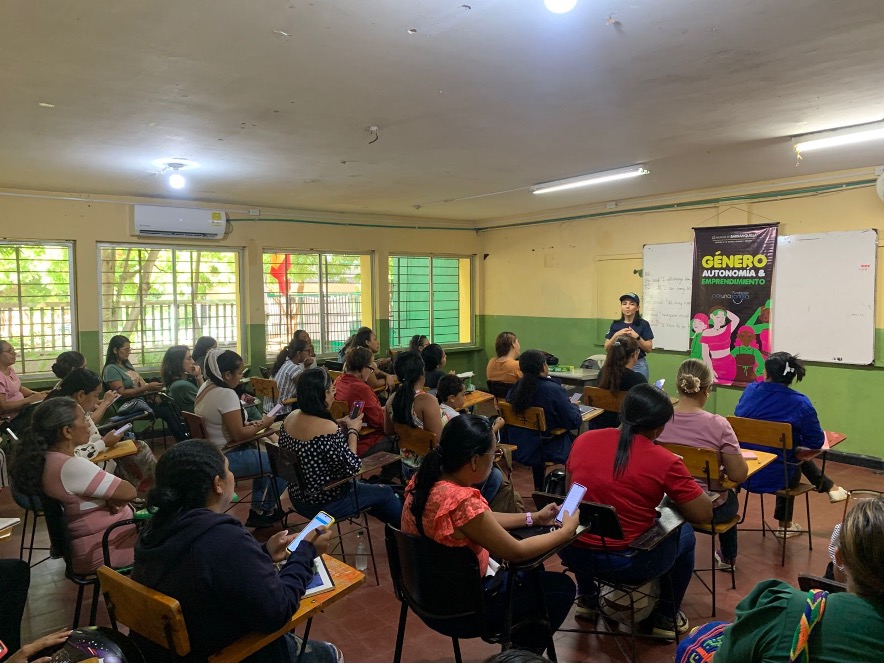
The Women’s Entrepreneurship Program was born from that conviction. More than 300 women from the District of Barranquilla participated in a training process designed not only to teach trades, but to create sustainable opportunities for income generation and personal growth.
The program combined practical skills with modern market tools. Participants received training in English, cosmetology, digital marketing, personal finance, and productive project development, complemented by an essential component: female empowerment and leadership.
The approach was different from traditional training.
It was not only about learning how to work, but about learning how to decide their own future.
Learning English expanded opportunities in customer service; cosmetology provided a high-demand technical skill; digital marketing opened the door to social-media commerce; and financial education taught how to manage income, calculate costs, and avoid informal debt.
Perhaps the most significant impact, however, was the human component.
Many participants gained not only knowledge, but confidence.
Female leadership training strengthened communication, decision-making, and life-planning skills. Several women started their own businesses, formalized previously informal economic activities, and began contributing financial stability to their households.
This type of initiative demonstrates a clear reality:
when a woman strengthens her economic autonomy, she does not only change her life… she changes the entire dynamic of her family and community.
Female entrepreneurship is not merely a productive strategy.
It is a high-impact social policy.
Because behind every woman who starts a business, there are children with better opportunities, more stable homes, and more resilient neighborhoods.
Investing in women is not social assistance.
It is sustainable development.

